

Article details
Never do repairs that need a panel removed, a safety device bypassed, a live measurement, a gas connection touched, or a sealed cooling system opened. Owner tasks stay on the outside: cleaning parts the manual names, checking visible connections, and shutting off power, water or gas at the supply if something looks unsafe.
Deciding how far a do-it-yourself fix should go is hard when an appliance is down and the household is waiting. One symptom rarely names the broken part, so the sensible start is a set of safe, repeatable observations that will also help if you book a Kenmore service visit afterward.
Regular upkeep is one thing; testing and taking things apart is another. Do not defeat a latch, a safety switch or an error message to get a machine going again. Jotting down some notes now can make the later diagnosis both quicker and more precise.
Start with the simple conditions
Ask first whether the problem involves heat, electricity, gas, water close to wiring, or a sealed cooling system, and only then attempt a routine check. Keep the appliance in its usual position and leave panels, fittings and controls unforced. If a minor change alters things, let one ordinary cycle or use pass before you reach a verdict.
Any job requiring a removed panel, a defeated safety device or a live reading falls outside do-it-yourself territory. Consider whether the problem appears each time, only under one load or setting, or after a stretch of running; that is worth more than restarting the unit again and again. If getting to the fix means opening the appliance, call a technician, whatever an online video claims.
| Warning sign | What to do | Avoid |
|---|---|---|
| Smell of something burning | Quit using the unit | Taking the appliance apart |
| Smell of gas | Get out and phone the gas supplier | Flipping any switch |
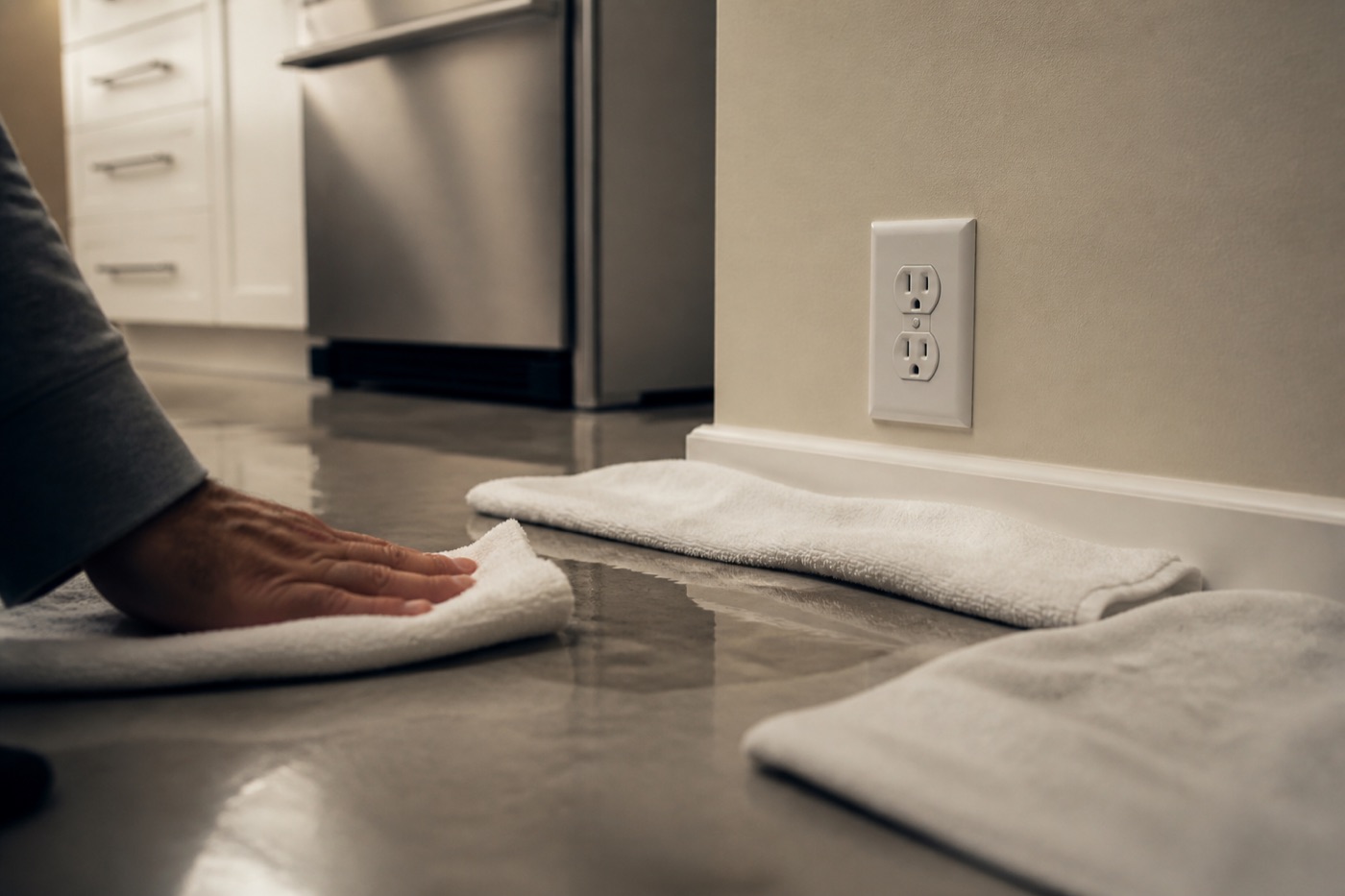
| Water near a socket | Cut the power the safe way | Handling a plug that is wet |
Where does the owner line sit for gas, power, and water?
According to the manual for a Kenmore gas range, only a qualified installer, servicer or the gas supplier should install or service gas appliances. On smelling gas, light nothing, leave electrical switches alone and stay off phones inside the building; phone the gas supplier from a neighbor’s home, or the fire department if that fails.
Dryer and oven manuals say not to repair or service the appliance unless the guide specifically recommends it. A Kenmore dishwasher showing an AE leak code calls for turning off the water supply and calling for service.
Safe checks that protect the appliance
Look to the use-and-care manual for the controls, filter access and care intervals of your particular model. Clean just the parts it labels as owner-serviceable, with the products it recommends, and seat every removable component the way the manufacturer intended.
Prior to running another cycle, free up anything that blocks the appliance, take some weight off a very full load, and verify that airflow, water supply and door clearance are unrestricted. Resetting repeatedly invites trouble, because an intermittent fault can stay hidden and water, heat or pressure may end up somewhere it should not.
- Copy down any message or error code on the display before it is cleared.
- Examine exposed hoses, vents, seals and plugs, leaving electrical connections where they are.
- Choose one well-planned test over many rapid attempts.
- If anything looks unsafe, turn off the breaker or the valve and then stop.
- Do not line oven bottom slots or racks with foil.
Within reach for owners
- Wash filters the manual permits
- Inspect connections in plain view
- Go through the manual
Belongs with a technician
- Fixing gas fittings
- Testing energized parts
- Breaking into refrigerant circuits
Which tasks do the manuals hand to the owner?
Manuals describe a short list of owner tasks: cleaning the lint screen, rinsing a dishwasher filter, cleaning the ice bin, wiping gaskets, and leveling an appliance. Those tasks do not involve opening anything or testing electricity.
A machine that still runs is not a reason to carry on. The dryer’s CHECK VENT indicator keeps the dryer running while dry times and energy use rise, and the manual says to stop using it for a severely blocked exhaust. Microwaves are not to be operated when the door, hinges, latches or seals are damaged.
Know when the symptom needs diagnosis
Once simple checks fail to shift the symptom, leave the rest to a professional. Cabinet wiring, heater circuits, pumps, motors, refrigerant lines, gas connections and control boards demand the proper instruments, and only a trained technician can confirm that the repair is safe.
Set up service right away if the appliance performs worse over time, a breaker trips, liquid appears near electrical components, there is a scorched or hot smell, a fresh grinding noise begins, or a normal cycle cannot be completed. Any appliance displaying a safety warning should be left off.
What to tell the technician
Bring up the model number, the specific symptom, its start date, the settings in use and the outcome of the safe checks. A picture of a code or a short account of a sound is a good addition, provided you never take a cover off to capture it.
Watching and noting is no repair, but it is the best way to begin. Take care of the plain conditions, keep any error information worth keeping, and give electrical, gas, sealed-system and internal mechanical work to a specialist Kenmore technician.
Common questions
What should I do if I smell gas?
Per the manuals: do not light any appliance, do not touch a switch, and do not use a phone inside. Step outside, then reach the gas supplier by phone, or the fire department.
Can I bypass a door lock to finish a cycle?
No. The front-loader manual says not to force the door, and the oven self-clean latch stays locked until the oven cools. Wait for the lock to release.
Is a grounded outlet really necessary?
Yes. Manuals for these appliances call for a grounded outlet, with no adapter or extension cord on refrigerators and washers. Improper grounding can cause electric shock.
Need help now? Visit our services page or contact us.
Official manuals and support notes are available on Kenmore Support.
Take down the whole model number before buying parts; revisions to boards and sensors can alter which part number is right.
Power-cycling once can wipe out a momentary fault, though a code returning time after time normally means something physical is still wrong.
Do not let vents and filters clog between visits. Reduced airflow frequently passes for an electrical or sensor failure.
Water, a smell of burning or sparks are reasons to stop using the appliance and call in a professional inspection.